
Friday, May 29, 2015

Thursday, May 28, 2015
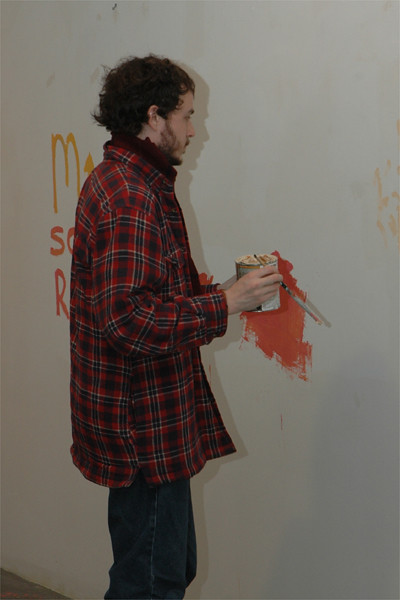
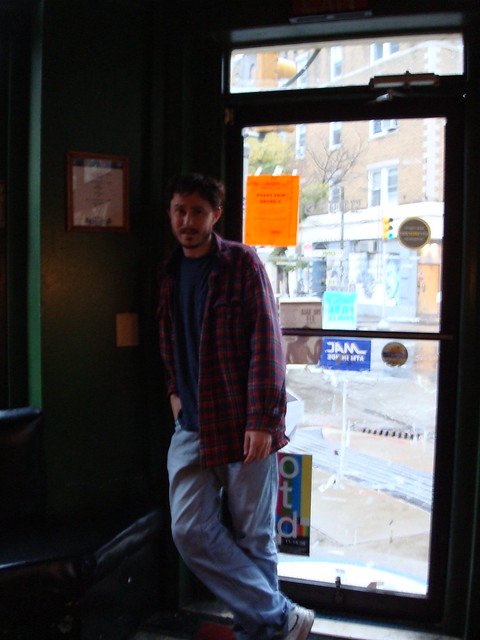
Various Juxtapositions

Gaetan Spurgin was a major PFS presence, partly because we all liked him, partly because he'd been a major presence in This Charming Lab, the predecessor to PFS. The shows we'd done in 2000 (Gaetan with his band Metro, me solo, and others, including Matt Stevenson and Radio Eris) at venues like The Khyber, The Pontiac Grille (aka JC Dobbs), and the Killtime Warehouse in West Philadelphia, had been, at best, semi-successful, but they had bonded us socially. Later in the early Aughts, I used the This Charming Lab moniker to book readings at the Kelly Writers House at Penn (see 3/27/04, Dominique, Stoning the Devil) as well. The multi-media angle was gradually built into it. But the 2000 version of This Charming Lab was mostly straight rock, and Gaetan, as front man for Metro, was a selling point to get the gigs. Gaetan was tall, brawny, and statue-esque, at 5'11; had lank blonde hair usually dyed jet black; closely resembled a Goth/fetish boutique version of Hugh Grant; and had (like Matt Stevenson) a killer IQ which meant that those who condescended to him were stunned to find themselves rebuffed.
By early '03, Gaetan was stationed in a live-in recording studio in South Philly, at 13th and...Carpenter? Ellsworth? I had the intriguing idea of fixing Gaetan up with Abby Heller-Burnham. I was with Mary, who shared Gaetan's penchant for Depeche Mode. So, the three of us descended on Gaetan's studio one late afternoon in spring '03. What happened was classic Philly Free School mayhem— Abs took one look at Gaetan, decided he was declasse (though she was happy to smoke his deliciously laced weed, as we all were) and wouldn't talk to him much. Even with me there, Mary and Gaetan started flirting. Blatantly. In such a way that I was gripped with weed paranoia. So, I disrupted Gaetan and Mary and found a manner of asserting that, in this time zone/context, Mary was...ahem...mine. Another little factoid worth confessing— Mary Harju is the only woman in my life who ever caused me sustained, chronic jealousy. In those days, when Mary decided to tart it up, I would go bonkers; and she enjoyed yanking my puppet strings. Yet, significantly, she did end up following my lead. Through our stoned fog, I managed to frog-march Mary and Abby out of Gaetan's studio. Mary confessed to being attracted to Gaetan; likewise, Gaetan had fallen for Mary very quickly, and was never quite the same again. A year later, I had broken up with Mary, and encouraged Gaetan to go after her. The truth is what it is— had Gaetan made the right moves then, something could've happened. But Gaetan was otherwise engaged, and forced not to act. The moment never returned.
Gaetan's band by '04, ElektroWorx, were at a tangent to Metro's glam/garage-punk; it was all Goth/industrial electronica, complete with (for their live shows) multi-media slides/ image presentations, which made them perfect for the Highwire and the Free School shows. ElektroWorx did precisely two Highwire shows— and, for the long season Mike and I spent doing the Center City rounds recruiting, promoting, and hustling our wares, Gaetan's studio in South Philadelphia was always a port of call for us. Mike and Gaetan got on well, as Mike treated Gaetan respectfully and was gracious (as was I) about smoking Gaetan's dope. Matt Stevenson and Gaetan Spurgin had several things in common, including high IQs and involvement in rock music production work. But because Gaetan was derisive about Radio Eris (who, honestly, I couldn't include in the Free School shows in the form they were in then because they were too dissonant), which was Matt's baby, they couldn't bond. Gaetan did visit us once while we were recording Ardent at 11th and Webster, also South Philadelphia. One punchline of this whole narrative is that ElektroWorx brought a crowd to the Highwire— the pungent Philly Goth/industrial crowd— who made an amusing contrast to the standard Philadelphia art-gallery ambiance enough that I knew these shows should be noted for posterity somehow. PFS had that stock-in-trade going: amusing juxtapositions. One perk about the Highwire shows I know Gaetan enjoyed— he got paid. As was important to the Highwire, our shows did turn a profit.

Tuesday, May 26, 2015
Mid-Aughts Mayhem

Summer '04 to summer '05 was the heaviest year to be on the street in Aughts Philadelphia. There was an explosive energy around everything— and my emotions oscillated, personally, between euphoria and dejection from night to night. It wasn't just the Philly Free School Highwire shows; because the Making Time DJ nights had a large national and international following, and all the DJs worked at the Last Drop, just to be in the Last Drop at that time was to be in a realm so supercharged that we might as well have been doing lines off the tables. Making Time even got a write-up in Rolling Stone, which was still around at the time. Adam Sparkles, who shared my name and birthday, ran the Last Drop with an iron fist. If he was laconic with PFS, it is because at that time he considered us competitors; even as the place, owing to its location, couldn't not be useful for us.
Yet, for many of us, the euphoria of success was counter-weighed by the dejection of living a life more excessive than I (or Jeremy or Abby, especially) had planned in our comparatively "salad" early Aughts days. Abs and I picked a weird moment to consummate our relationship, but there it was. The low point of the year for me was confessing to Mary Harju, who was no dummy and knew the score. Mary and I had been separated for over a year, but still. The one Philly Free School show Mary deigned to attend at the Highwire (at which we showed her Dionysus), she brought her sister Laurie, who was as blonde and pixie-faced as Mary but sharper about making her way materially in the world. She was essentially conservative, and had a way of making us feel like heathens for being artists. The mind-games she tended to play with Mary were often family-oriented, and they could be vicious. Mary's "husband" that night wore a tie-dye, and was truculent. Ruth, the third sister Harju (or Hariu, as they, including Laird and Bethany, sometimes spelled it), was more handsome than pixie-faced, brunette, a potential head about literature, and wavered somewhere between Mary and Laurie. So, oddly, my most promiscuous time passed without much real contact with Mary at all. She'd be back in '07 and '08. Hannah Miller was in, explosive, and then gone, as was Mary Walker Graham in New Hampshire.
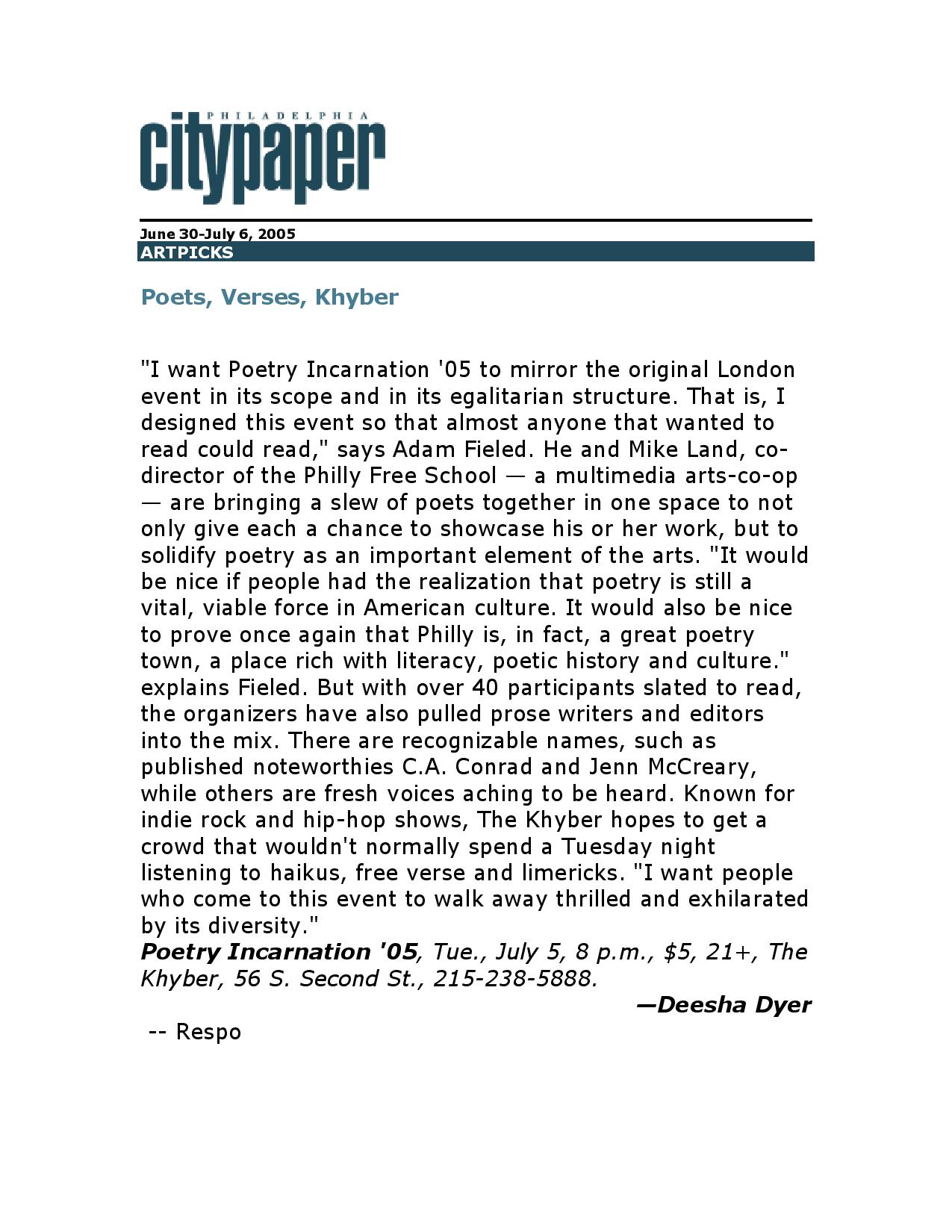
Unsurprisingly, Mike Land was (or appeared to be) in heaven. Everywhere we went together, including the Highwire, we were treated like celebrities, because the Free School shows were big news— even the Philadelphia City Paper was in on them. It also didn't escape my notice that for these months, we were living the way the Beatles and the Stones (or Floyd) were supposed to have lived. If Mike Land was a surprise and a superlative running buddy at a time like this, it is because he was good with euphoric moods, but also with dejected ones— he had a precociously developed appreciation of the human condition, and an empathy with pain and human suffering, which meant that (as, again, I was surprised by) he was no fair weather friend at all. I came to the conclusion— beneath the hustle and the good looks, Mike Land was a very old soul. Jeremy was crabbed and deficient this way (having sustained bruises we all knew about) and not someone to lean on; Abs, and/or Ms. H, maybe. In the right mood, they could be stand-up friends. It also never ceases to amaze me that it is here, with all this tumult going on, that Abby fulfilled her destiny and painted her masterpieces.
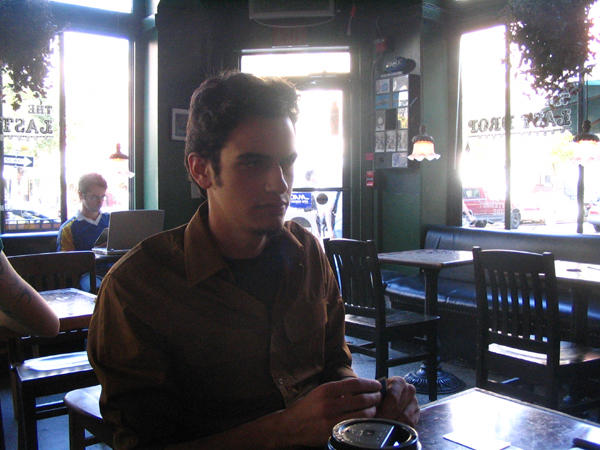
attached photo of the inside of the Highwire Gallery main space (Highwire 1)
Monday, May 25, 2015
Triad: The End of Our Troils Pt. 2

There was a night in October 2002 I was recording in South Philadelphia with Radio Eris keyboardist/utility producer Matt Stevenson, who was also a photographer of note. What we were recording became the spoken word album Raw Rainy Fog. I have described in detail elsewhere precisely what Main Street West (aka Webster Street Studios) at 11th and Webster in South Philadelphia was like; to nut-shell the thing, a lovable hovel. I had picked up some Paisano red wine, because we were to have guests that night— Mary Harju and Abby Heller-Burnham. As of autumn '02, Mary and I were entrenched, and Abby was our constant companion. When they arrived, we smoked the requisite bowl (Matt's weed) from Matt's little marble-textured piece, and I poured the wine. This was, I laugh to remember, rather a mistake— Mary and Abby, together or separately, could hold their pot but not their booze. So, Matt was forced to watch, in semi-bemused fashion, as the two painters disintegrated into cacophonous incoherence and tantrum-like upset. They were a tumultuous pair; and, a few months after that (February '03), they moved into a two bedroom flat in a complex on 42nd Street off of Baltimore Avenue in West Philadelphia, where Mary had lived for a few years already at the pictured 4325 commune. I was Mary's hubs, and there constantly.
One nuance to remember about Mary and Abby, as a Dynamic Duo, or double manifestation of the Creatrix— Mary, through a rigorous and rigorously enforced regimen of scant, vegetarian eating, was always perfectly thin, if still rather more big-boned up close than one would think; Abby Heller-Burnham's weight was always fluctuating between extreme thinness and chunkiness. Her quandary was clear— the better she was painting, the more she liked to eat. Mary had a height advantage, as well— her Grace Kelly-like near 5'8 (later matched, precisely, by Hannah Miller, and by Jennifer Strawser before) to Abby's elfin five feet even. Jenny Kanzler, turns out, held down the mid-range at 5'5. The flat itself was nondescript— a large kitchen/living room space (the kitchen had an island), flanked by bedrooms on either side. No serious painting could be done there— Abby and Mary both had studios elsewhere. Because Mary had a hubs, she was given the larger, master bedroom, as we alternated apartments night by night as usual (I was still at 21st and Race). An important facet of Abby's personality which became visible at this time was her slow-burn Virgo temper— she was pissed at Mary's marriage to me, and harbored a secret grievance that she (the reason wasn't important) deserved the master bedroom. It's just that they both knew by then (without necessarily verbalizing it) what it would take me a number of years to realize for myself—Abby Heller-Burnham was a greater artist than Mary Harju. She was more inventive, imaginative, and formally rigorous, building on French Neo-Classicists Ingres and David from a firm base of solid contemporary engagement, including an immersion in confrontational, New York-style queer politics. Mary tended to lean on fluency in and masterful applique of traditional forms; even as she did also have a substantial engagement, more tilted to the nouveau, with photography, as well. Simmering in them in '03 was a congeries of these issues, destined to influence and sometimes confound the Aughts years ahead.
The Creatrix, as a definable character in art, has now developed out of Neo-Romanticism. The Creatrix is a female artist who embodies the self-determination, autonomy, and complex sense of individuality which tends to manifest in Neo-Ro, and Neo-Ro creations. I am taking for granted that the Creatrix, as a definable art-character, does begin with Abby Heller-Burnham, Mary Evelyn Harju, and Jenny Kanzler. What distinguishes the Creatrix from post-modern female, and feminist, archetypes, is a sense of Eros, or the erotic, developed itself to an extreme pitch of intensity. This, even in Kanzler, where this development is stunted or warped into mutant form. The sense of the erotic is grasped, felt, and registered with emotions consonant with an integration not found in post-modernity: straightforward passion, straightforward longing, straightforward physical need, conveyed in a fashion which does not need to abuse the viewer with the dull, dispossessed ironies which have now become a post-modern tradition. Why Eros in American art can be made new now, especially with Heller-Burnham’s immersion in queer life, is that Eros in American art has never had formal parameters imposed on it, by painters who are not merely servants, but masters, of formality, on a level with classicist Europe. This is not to say that the Creatrix has to be a painter. But, if we are to start with Heller-Burnham, Harju, and Kanzler as initial archetypes, these are some reference points which might be of service to us, in an effort not to be strained by an atmosphere in which narratives of form, and narratives of passion, are disavowed. The Creatrix, it could also be said, is a cultural manifestation of post-feminism, or a post-feminist sensibility. The Creatrix extends creatively past the constraints of feminism.
Subscribe to:
Posts (Atom)